



Crypto mining can be profitable in some situations, but there is no universal yes or no answer. The result depends on the coin, the mining hardware, electricity price, network difficulty, uptime, cooling and the price at which mined coins can be sold. A setup that works in one location may lose money in another.
Start with daily revenue
Revenue is the number of coins mined per day multiplied by the coin price. If a machine is expected to mine 0.0001 coin per day and the entered market price is $60,000, the rough daily revenue is $6. That figure is not fixed. Mining output can change as network difficulty and the amount of competing computing power change.
Calculate electricity cost
Convert the machine’s watts to kilowatts by dividing by 1,000. Multiply that by 24 hours and by the electricity price per kilowatt-hour. A 1,500-watt machine running all day uses 36 kWh. At $0.12 per kWh, electricity alone costs $4.32 per day.
Subtracting $4.32 from $6 leaves $1.68 before every other cost. Multiplying by 30 gives a simple monthly estimate, but real months and uptime vary.
Costs the simple formula misses
Hardware has a purchase price and a useful life. Fans, power supplies and miners can fail. Cooling and ventilation may consume extra electricity. A mining pool may charge a fee, and converting mined coins can involve trading or withdrawal costs. Taxes and local rules may also matter.
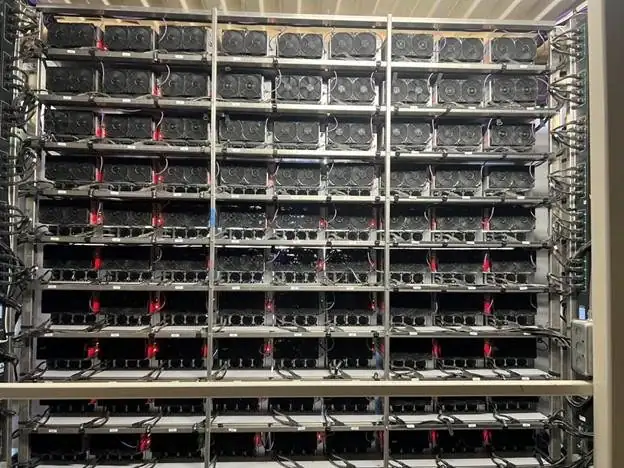
Noise and heat are practical costs. Specialized mining equipment can be loud and continuously release significant heat. Home electrical circuits may not be designed for a large constant load, so qualified electrical advice may be necessary.
Price and difficulty move
A coin price can rise or fall quickly. Network difficulty can increase when more mining power joins, reducing the amount earned by the same machine. Block-reward changes can also cut revenue. Using one day’s output and price for a long-term forecast can therefore be misleading.
Model your own numbers
The Crypto Mining Profitability Calculator uses your estimate for coins mined per day, coin price, power draw and electricity rate. It shows daily revenue, daily electricity cost and a 30-day profit estimate.
Use recent figures from your exact miner, pool and utility bill, then test less favorable scenarios. A rough calculator is useful for screening an idea, not for guaranteeing income or replacing technical, financial or electrical advice.
Frequently Asked Questions
What is the biggest mining cost?
Electricity is often the largest ongoing cost, but hardware, cooling, pool fees and repairs also matter.
Why does mining output change?
Network difficulty, competition, reward rules and uptime can change the coins earned.
How do I calculate daily electricity cost?
Multiply kilowatts by 24 hours and by your electricity price per kWh.
Does the calculator use live prices?
No. Enter your own coin price and estimated daily output so every assumption is visible.